Xinjiang Agricultural Sciences ›› 2025, Vol. 62 ›› Issue (S1): 166-170.DOI: 10.6048/j.issn.1001-4330.2025.S1.033

• Plant protection colume • Previous Articles     Next Articles

Effects of the occurrence and distribution of ragweed (Ambrosia artemisiifolia) in Xinjiang on people's livelihood

CHEN Pengyou1(), LI Xuan2, LIN Jun2, FU Wenjun3, WU Wei4, WEN Jun5, Jiamaliding Wulezhahan5, MA Long6, ZHAO Deliang6, DING Xinhua1, JIA Zunzun1, WANG Xiaowu1, Tursun Ahemati1, GUO Wenchao1(), FU Kaiyun1()   

  1. 1 Key Laboratory of Integrated Pest Management on Crops in Northwestern Oasis/Ministry of Agriculture and Rural Affairs/National Plant Protection Scientific Observation and Experiment Station of Korla/Xinjiang Key Laboratory of Agricultural Biosafety/Institute of Plant Protection, Xinjiang Uygur Autonomous Region Academy of Agricultural Sciences, Urumqi 830091, China
    2 Xinjiang Uygur Autonomous Region Grassland Biological Disaster Prevention and Control Center, Urumqi, 836699, China
    3 Agricultural Technology Extension Station of Yili Kazak Autonomous Prefecture, Yining Xinjiang, 835099, China
    4 Xinyuan County Agricultural Technology Extension Station, Xinyuan Xinjiang, 835811, China
    5 Yili Locust Control and Rodent Control Command Center, Yili Xinjiang, 835000, China
    6 Xinyuan County Grassland Workstation/Xinyuan County Locust Control and Rodent Control Command Center, Xinyuan Xinjiang 835899, China
  • Received:2025-06-20 Online:2025-10-10 Published:2025-10-29
  • Correspondence author: GUO Wenchao, FU Kaiyun
  • Supported by:
    Major Science and Technology Projects in Xinjiang(2023A02006);Research project of the youth theoretical study group of Xinjiang Uygur Autonomous Region Academy of Agricultural Sciences

豚草在新疆的发生分布及影响程度分析

陈朋友1(), 李璇2, 林峻2, 付文君3, 吴伟4, 文俊5, 加马力丁·乌拉扎汗5, 马龙6, 赵德良6, 丁新华1, 贾尊尊1, 王小武1, 吐尔逊·阿合买提1, 郭文超1(), 付开赟1()   

  1. 1 新疆维吾尔自治区农业科学院植物保护研究所/农业农村部西北荒漠绿洲作物有害生物综合治理重点实验室/国家植物保护库尔勒观测实验站/新疆农业生物安全重点实验室, 乌鲁木齐 830091
    2 新疆维吾尔自治区草原生物灾害防控中心, 乌鲁木齐 836699
    3 伊犁哈萨克自治州农业技术推广总站, 新疆伊宁 835099
    4 新源县农业技术推广站, 新疆新源 835811
    5 伊犁哈萨克自治州治蝗灭鼠指挥中心, 新疆伊犁 835000
    6 新源县草原工作站/新源县治蝗灭鼠指挥中心, 新疆新源 835899
  • 通讯作者: 郭文超,付开赟
  • 作者简介:陈朋友(1993-),男,河南人,博士,研究方向为植物生态学,(E-mail)CPY826@126.com
  • 基金资助:
    新疆维吾尔自治区重大科技专项(2023A02006);新疆维吾尔自治区农业科学院青年理论学习小组调研项目

Abstract:

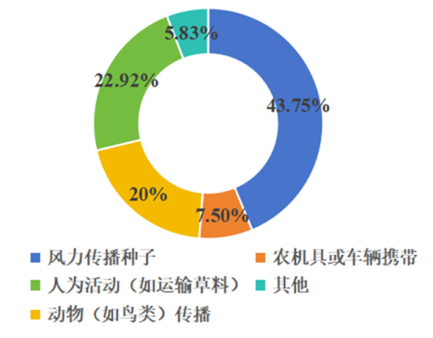
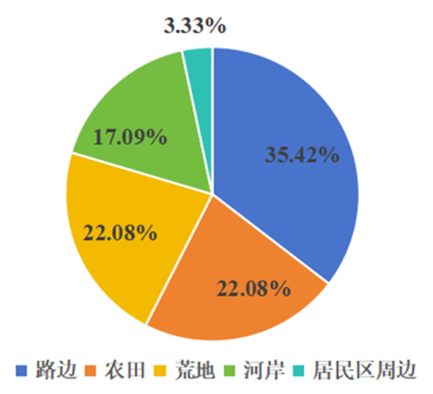
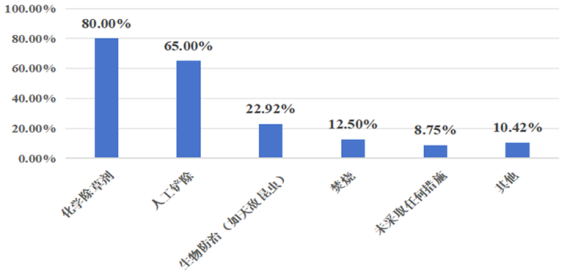
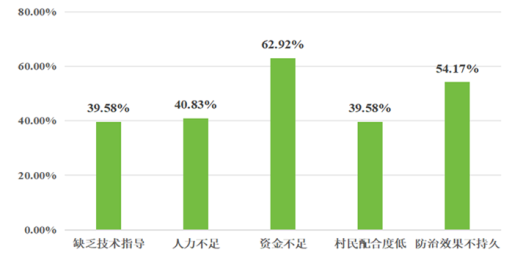
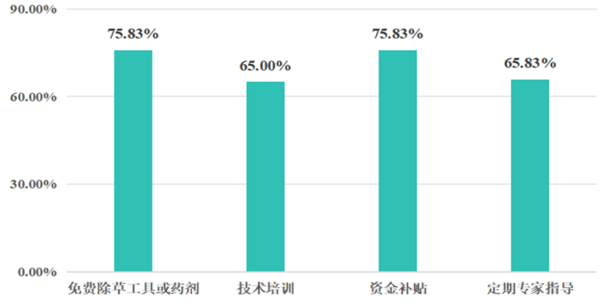
【Objective】 Common ragweed (Ambrosia artemisiifolia) is an invasive weed that severely threatens ecological security and public health in Xinjiang.However, the specific impacts on livelihoods and residents' demands for control measures have not been systematically evaluated.This study aims to quantitatively assess the effects of ragweed on residents' lives through systematic surveys and explore sustainable management strategies tailored to Xinjiang's unique context. 【Methods】 A questionnaire survey was designed to evaluate respondents' cognition level, invasion status, prevention and control behavior and demand of ragweed.The questionnaire was distributed across multiple counties and cities in Xinjiang via a professional platform, yielding 240 valid responses.Combined with literature analysis and statistical methods, the study assessed ragweed's impact on livelihoods and control needs. 【Results】 Cognitive level: 98.75% of respondents were aware of ragweed, with 75% recognizing its high reproductive capacity.43.75% reported that they or their family members had experienced symptoms due to ragweed pollen.51.67% identified ecological imbalance as the primary harm of ragweed, and 43.75% correctly noted wind-mediated seed dispersal.Invasion status: Ragweed was detected in 65% of villages/communities, with 30% observing significant expansion over the past five years.Roadsides (35.42%) and farmlands were key challenging areas for control.36.67% reported crop yield reduction due to ragweed, and 21% faced health issues.Prevention practices and demands: 80% relied on chemical herbicides, with 41.67% considering chemical control the most effective.62.92% cited insufficient funding, and 54.17% noted that the control effect was not lasting.75.83% desired free weeding tools and subsidies, 86.67% advocated for a monitoring and early-warning system, and 80% called for ecological compensation. 【Conclusion】 Residents demonstrate high awareness of ragweed, yet its spread poses threats to agriculture and public health.Current control measures predominantly rely on chemical methods but face challenges such as funding shortages and technical limitations.Future efforts should strengthen communication and collaboration with residents, establishing a model of scientific and technological support and multi-governance, give priority to monitoring and early warning, ecological compensation and technical training, stimulate residents' enthusiasm for participation, and achieve long-term governance.

Key words: Ambrosia artemisiifolia; invasion status; effects of people's livelihood; prevention practices and demands

摘要:

【目的】 通过系统调查,量化评估豚草对居民生活的影响程度,探索符合新疆特色的豚草可持续发展路径。【方法】 采用问卷调查法,围绕受访者对豚草的认知水平、入侵现状、防治行为及需求设计问卷调查表,通过专业平台发放至全疆多个县市,共回收有效问卷240份。结合文献分析与统计学方法,评估豚草的影响及防控需求。【结果】 认知层面:98.75%的受访者知晓豚草,75%的人了解其强繁殖特性,受访者或其家人因豚草花粉出现病症的人占43.75%,51.67%的人认为豚草的主要危害是破坏生态平衡,43.75%的人明确其主要通过风力传播。入侵现状:65%的村/社区已发现豚草,30%的人认为其近5年分布显著扩大,路边(35.42%)和农田是防控难点,36.67%的人认为豚草导致农作物减产,21%的人面临健康问题。防治行为与需求:80%的受访者依赖化学除草剂,且41.67%的人认为化学防治最有效。62.92%的人反映资金不足,54.17%的人认为防治效果不持久;75.83%的人希望获得免费除草工具和资金补贴,86.67%的人呼吁建立监测预警系统,80%的人希望提供生态补偿。【结论】 居民对豚草认知水平较高,而豚草的扩散对农业生产构成威胁。当前防控措施以化学防治为主,但存在资金短缺、技术不足等问题。应加强与居民的沟通与合作,构建科技支撑+多元共治模式,优先落实监测预警、生态补偿和技术培训,激发居民参与积极性,实现长效治理。

关键词: 豚草, 入侵现状, 民生影响, 防治需求

CLC Number: