

新疆农业科学 ›› 2025, Vol. 62 ›› Issue (7): 1687-1696.DOI: 10.6048/j.issn.1001-4330.2025.07.014
李玉姗1( ), 马越1, 张瑜琨2, 田超1, 赵连佳1, 王风琴1, 李忠晴1, 王帆1, 卿全1, 宋羽1()
收稿日期:2024-12-05
出版日期:2025-07-20
发布日期:2025-09-05
通信作者:
宋羽(1980-),男,新疆石河子人,研究员,博士,研究方向蔬菜种质资源鉴定及设施栽培、新品种测试,(E-mail)songyu150@163.com作者简介:李玉姗(1993-),女,甘肃人,硕士研究生,研究方向为蔬菜种质资源收集保存与鉴定评价,(E-mail)1105447858@qq.com
基金资助:
LI Yushan1(), MA Yue1, ZHANG Yukun2, TIAN Chao1, ZHAO Lianjia1, WANG Fengqin1, LI Zhongqing1, WANG Fan1, QING Quan1, SONG Yu1()
Received:2024-12-05
Published:2025-07-20
Online:2025-09-05
Supported by:摘要:
【目的】对收集的番茄种质资源开展表型鉴定与综合评价,为番茄遗传改良提供资源与理论参考。【方法】通过对“新疆维吾尔自治区第三次全国农作物种质资源普查与收集行动”(简称新疆“三普”)及“新疆农作物种质资源系统调查和抢救性收集”收集的137份番茄种质资源测定全生育期表型性状,利用遗传多样性分析、变异分析、相关性分析、主成分综合评价等方法,分析新疆“三普”收集番茄资源多样性,筛选品质优异的番茄资源。【结果】新疆“三普”收集到的番茄资源90%以上为无限生长的普通大果型鲜食番茄,5%的为有限生长类加工番茄;番茄果实性状和风味品质性状的遗传多样性最丰富,其中果形的遗传多样性指数最高1.432、心室数变异系数最大43%;按照番茄风味品质综合评价值进行聚类分析,分为七大类群,其中Ⅰ、Ⅲ类群为品质优异的樱桃番茄资源,第Ⅱ类群为品质优异的大果型番茄资源,可作为优质番茄育种的优异种质资源及分子育种材料。【结论】新疆三普收集的番茄种质资源表型多样性丰富,筛选出了风味品质优异的樱桃番茄资源和大果番茄资源。
中图分类号:
李玉姗, 马越, 张瑜琨, 田超, 赵连佳, 王风琴, 李忠晴, 王帆, 卿全, 宋羽. 新疆番茄种质资源表型鉴定与评价[J]. 新疆农业科学, 2025, 62(7): 1687-1696.
LI Yushan, MA Yue, ZHANG Yukun, TIAN Chao, ZHAO Lianjia, WANG Fengqin, LI Zhongqing, WANG Fan, QING Quan, SONG Yu. Phenotypic characterization and evaluation of tomato germplasm resources resources of Xinjiang[J]. Xinjiang Agricultural Sciences, 2025, 62(7): 1687-1696.
| 性状 Triats | 多样性指数 H' | 性状 Triat | 多样性指数 H' | 性状 Triat | 多样性指数 H' |
|---|---|---|---|---|---|
| 下胚轴颜色(HC) | 0.043 | 簇生花(FIC) | 0.568 | 果肩形状(FSS) | 0.732 |
| 生长习性(GH) | 0.300 | 花柱长度(SL) | 1.057 | 果肩色(FSC) | 1.023 |
| 株型(PT) | 0.420 | 花柱形状(SS) | 1.002 | 绿果肩大小(SOGS) | 0.919 |
| 茎叶茸毛(SALF) | 1.32 | 花色(FC) | 0.265 | 果形(FS) | 1.432 |
| 叶片类型(LT) | 0.620 | 花梗离层() | 0.043 | 横切面形状(SOFC) | 0.49 |
| 叶片形状(LS) | 0.130 | 成熟前果色(FCPTR) | 0.849 | 果肉色(PC) | 0.967 |
| 叶状态(LA) | 0.667 | 成熟果色(MFC) | 1.234 | 胶状物颜色(COPG) | 1.354 |
| 叶色(LC) | 0.516 | 果肩棱沟(FSRG) | 1.197 | 果皮色(FPC) | 1.162 |
| 叶脉色(LVC) | 0.279 | 果面茸毛(FSF) | 0.691 | 肉质(PF) | 1.127 |
| 叶裂刻(LI) | 0.346 | 果顶形状(FTS) | 1.118 | 风味 (FF) | 1.036 |
| 花序类型(IT) | 0.683 | 果肩(FS) | 0.664 | 综合品质(CQ) | 0.86 |
表1 新疆“三普”番茄种质资源的质量性状遗传多样性
Tab.1 Genetic Diversity of Qualitative Traits in Tomato Germplasm Resources from the Third National Census in Xinjiang
| 性状 Triats | 多样性指数 H' | 性状 Triat | 多样性指数 H' | 性状 Triat | 多样性指数 H' |
|---|---|---|---|---|---|
| 下胚轴颜色(HC) | 0.043 | 簇生花(FIC) | 0.568 | 果肩形状(FSS) | 0.732 |
| 生长习性(GH) | 0.300 | 花柱长度(SL) | 1.057 | 果肩色(FSC) | 1.023 |
| 株型(PT) | 0.420 | 花柱形状(SS) | 1.002 | 绿果肩大小(SOGS) | 0.919 |
| 茎叶茸毛(SALF) | 1.32 | 花色(FC) | 0.265 | 果形(FS) | 1.432 |
| 叶片类型(LT) | 0.620 | 花梗离层() | 0.043 | 横切面形状(SOFC) | 0.49 |
| 叶片形状(LS) | 0.130 | 成熟前果色(FCPTR) | 0.849 | 果肉色(PC) | 0.967 |
| 叶状态(LA) | 0.667 | 成熟果色(MFC) | 1.234 | 胶状物颜色(COPG) | 1.354 |
| 叶色(LC) | 0.516 | 果肩棱沟(FSRG) | 1.197 | 果皮色(FPC) | 1.162 |
| 叶脉色(LVC) | 0.279 | 果面茸毛(FSF) | 0.691 | 肉质(PF) | 1.127 |
| 叶裂刻(LI) | 0.346 | 果顶形状(FTS) | 1.118 | 风味 (FF) | 1.036 |
| 花序类型(IT) | 0.683 | 果肩(FS) | 0.664 | 综合品质(CQ) | 0.86 |
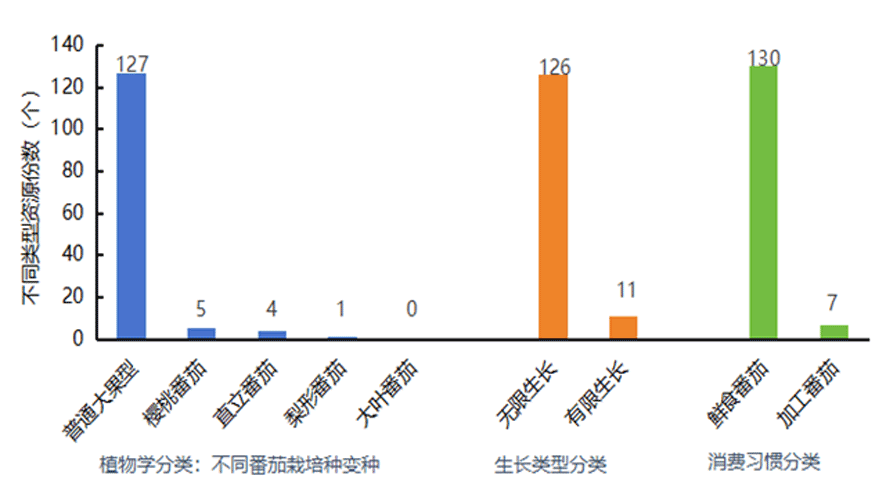
图1 新疆“三普”番茄种质资源分类
Fig.1 Classification of tomato germplasm resources in Xinjiang based on the third national census
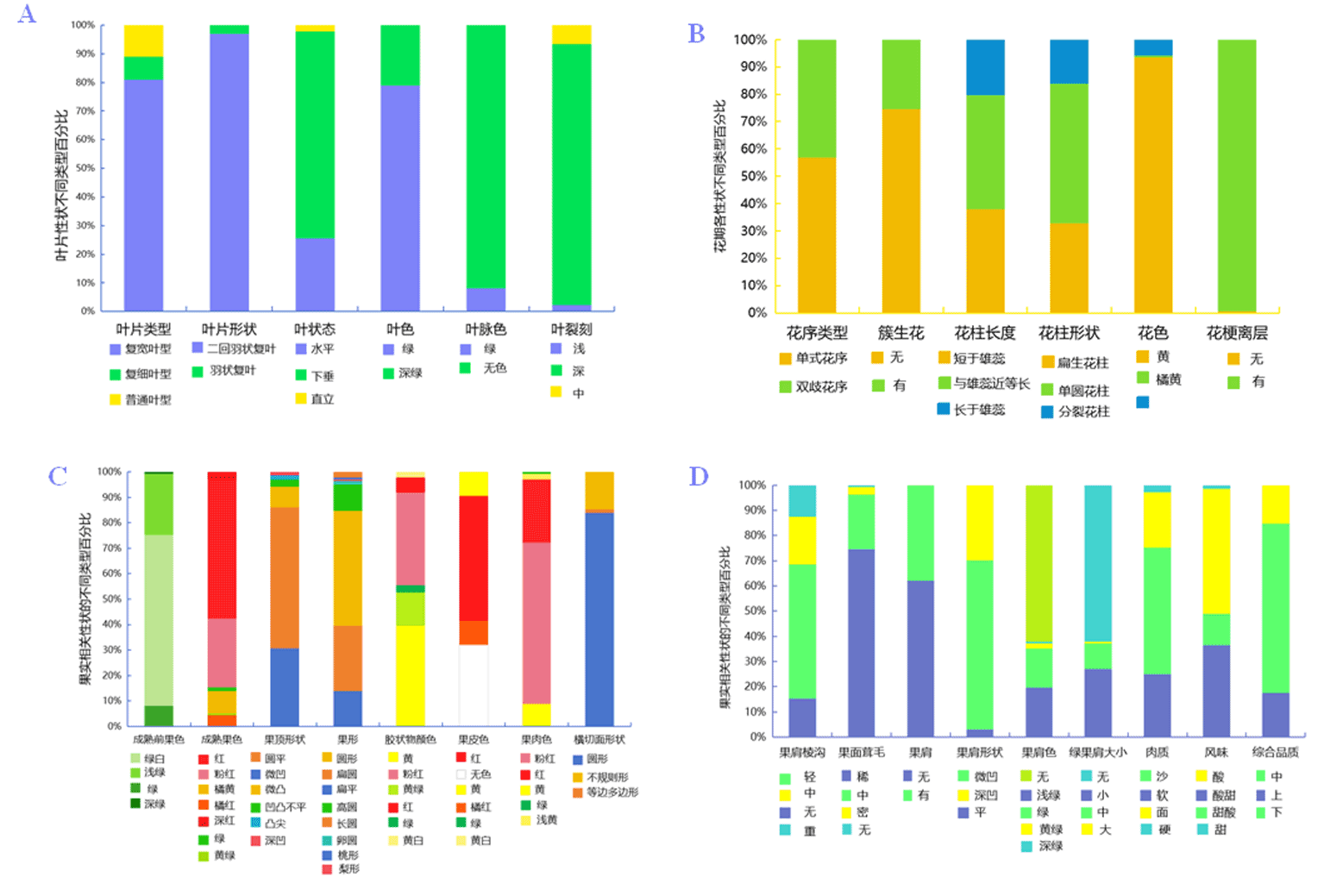
图2 新疆“三普”番茄资源质量性状各类型占比分布 注:(A)叶片相关性状(B)花期相关性状(C、D)果实品质相关性状
Fig.2 Proportional distribution of qualitative trait categories in tomato germplasm resources from the third national census in Xinjiang Notes:(A) Leaf-related Traits, (B) Flowering Period-related Traits, (C, D) Fruit Quality-related Traits
| 性状 Traits | 均值 Mean | 标准差 SD | 变异系数 CV | 最大值 Max | 最小值 MIN | 极差 Range |
|---|---|---|---|---|---|---|
| 株高PH(cm) | 181.84 | 40.01 | 22% | 240.29 | 65.60 | 174.69 |
| 叶片长LL(cm) | 36.61 | 4.08 | 11% | 47.97 | 22.72 | 25.25 |
| 叶片宽LW(cm) | 35.98 | 4.63 | 13% | 45.83 | 21.53 | 24.30 |
| 首花序节位FIN(节) | 7.88 | 0.92 | 12% | 10.00 | 5.70 | 4.30 |
| 第二花序节位SIN(节) | 10.71 | 1.00 | 9% | 13.00 | 8.00 | 5.00 |
| 单花序花数FNPI(个) | 6.10 | 1.37 | 22% | 13.00 | 3.30 | 9.70 |
| 萼片数SN(片) | 7.26 | 1.34 | 18% | 11.60 | 5.02 | 6.58 |
| 果柄长度PL(cm) | 1.09 | 0.33 | 31% | 2.68 | 0.43 | 2.25 |
| 果实纵径FLD(cm) | 5.87 | 1.05 | 18% | 13.85 | 2.86 | 10.99 |
| 果实横径FTD(cm) | 7.09 | 1.42 | 20% | 11.47 | 2.71 | 8.76 |
| 果梗洼大小SCS(cm) | 1.01 | 0.27 | 27% | 1.93 | 0.20 | 1.73 |
| 木栓化大小FSA(cm) | 1.74 | 0.48 | 28% | 3.00 | 0.39 | 2.61 |
| 果肉厚FT(cm) | 0.63 | 0.12 | 19% | 0.98 | 0.27 | 0.71 |
| 心室数LN(cm) | 6.66 | 2.86 | 43% | 15.00 | 2.00 | 13.00 |
| 单果重IFW(g) | 176.34 | 71.75 | 41% | 436.51 | 14.82 | 421.69 |
| 果实硬度FF(N) | 11.61 | 2.22 | 19% | 21.75 | 7.50 | 14.25 |
| 可溶性固形物含量SSS(°Brix) | 5.21 | 0.62 | 12% | 7.44 | 3.72 | 3.72 |
| 总糖含量TSC | 5.03 | 0.71 | 14% | 7.61 | 3.14 | 4.47 |
| 总酸含量TAC | 1.52 | 0.38 | 25% | 2.32 | 0.61 | 1.71 |
| 糖酸比STAR | 3.79 | 1.29 | 34% | 11.59 | 2.22 | 9.36 |
表2 新疆“三普”番茄种质资源的质量性状遗传多样性
Tab.2 Genetic Diversity of Quantitative Traits in Tomato Germplasm Resources from the Third National Census in Xinjiang
| 性状 Traits | 均值 Mean | 标准差 SD | 变异系数 CV | 最大值 Max | 最小值 MIN | 极差 Range |
|---|---|---|---|---|---|---|
| 株高PH(cm) | 181.84 | 40.01 | 22% | 240.29 | 65.60 | 174.69 |
| 叶片长LL(cm) | 36.61 | 4.08 | 11% | 47.97 | 22.72 | 25.25 |
| 叶片宽LW(cm) | 35.98 | 4.63 | 13% | 45.83 | 21.53 | 24.30 |
| 首花序节位FIN(节) | 7.88 | 0.92 | 12% | 10.00 | 5.70 | 4.30 |
| 第二花序节位SIN(节) | 10.71 | 1.00 | 9% | 13.00 | 8.00 | 5.00 |
| 单花序花数FNPI(个) | 6.10 | 1.37 | 22% | 13.00 | 3.30 | 9.70 |
| 萼片数SN(片) | 7.26 | 1.34 | 18% | 11.60 | 5.02 | 6.58 |
| 果柄长度PL(cm) | 1.09 | 0.33 | 31% | 2.68 | 0.43 | 2.25 |
| 果实纵径FLD(cm) | 5.87 | 1.05 | 18% | 13.85 | 2.86 | 10.99 |
| 果实横径FTD(cm) | 7.09 | 1.42 | 20% | 11.47 | 2.71 | 8.76 |
| 果梗洼大小SCS(cm) | 1.01 | 0.27 | 27% | 1.93 | 0.20 | 1.73 |
| 木栓化大小FSA(cm) | 1.74 | 0.48 | 28% | 3.00 | 0.39 | 2.61 |
| 果肉厚FT(cm) | 0.63 | 0.12 | 19% | 0.98 | 0.27 | 0.71 |
| 心室数LN(cm) | 6.66 | 2.86 | 43% | 15.00 | 2.00 | 13.00 |
| 单果重IFW(g) | 176.34 | 71.75 | 41% | 436.51 | 14.82 | 421.69 |
| 果实硬度FF(N) | 11.61 | 2.22 | 19% | 21.75 | 7.50 | 14.25 |
| 可溶性固形物含量SSS(°Brix) | 5.21 | 0.62 | 12% | 7.44 | 3.72 | 3.72 |
| 总糖含量TSC | 5.03 | 0.71 | 14% | 7.61 | 3.14 | 4.47 |
| 总酸含量TAC | 1.52 | 0.38 | 25% | 2.32 | 0.61 | 1.71 |
| 糖酸比STAR | 3.79 | 1.29 | 34% | 11.59 | 2.22 | 9.36 |

图3 新疆“三普”番茄种质资源20个数量性状相关性 注:右上部颜色表示相关性强弱,左下部数字为相关性系数;*表示 0.05 显著水平,**表示 0.01 显著水平
Fig.3 Clustered heatmap of correlations among 20 quantitative traits in tomato germplasm resources Notes:The color gradient in the upper right section indicates the strength of correlations, while the numerical correlation coefficients are displayed in the lower left section. * represents a significant level of 0.05, ** represents a significant level of 0.01
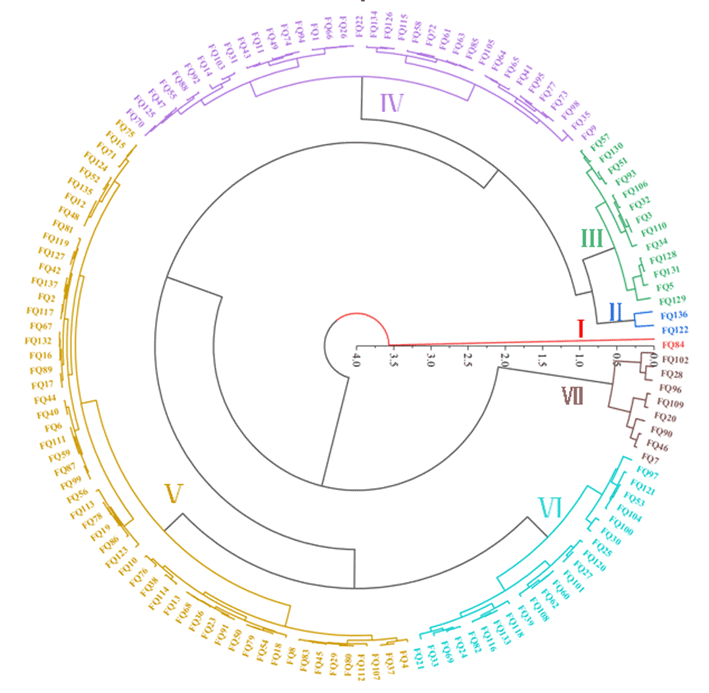
图4 番茄风味品质性状聚类
Fig.4 Hierarchical clustering visualization of tomato flavor quality
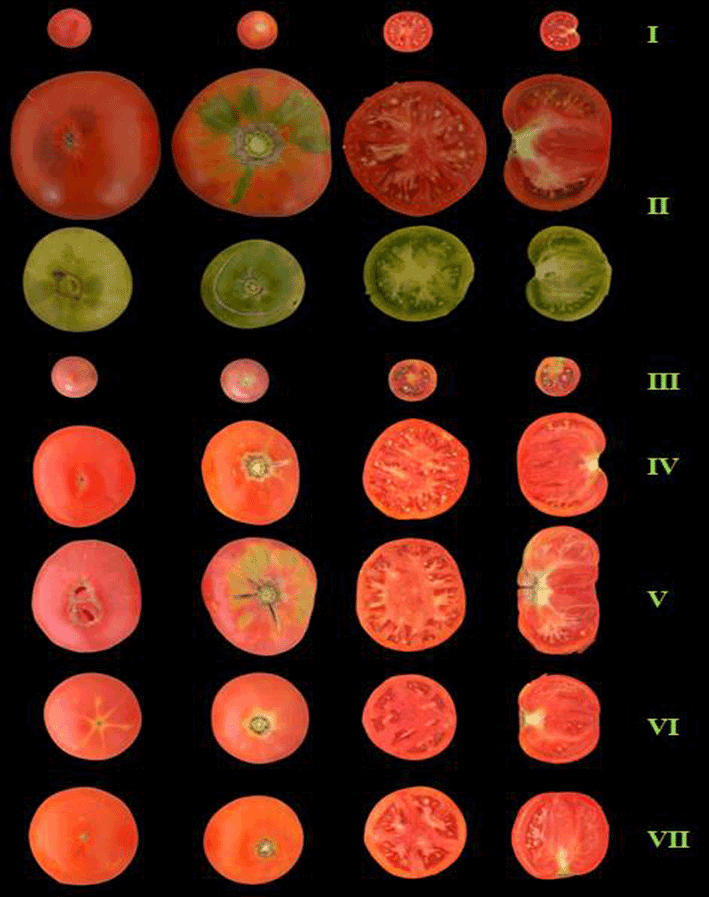
图5 不同类群代表性番茄资源
Fig.5 Representative pictures of tomato resources from different groups
| 性状 Triats | 主成分 Principal component | 线性组合中的系数 Coefficients in linear combinations | ||
|---|---|---|---|---|
| PC1 | PC2 | PC1 | PC2 | |
| 糖酸比(Sugar acid ratio,SAR) | 0.798 | -0.543 | 0.54 | -0.42 |
| 可溶性固形物(Soluble solids,SS) | 0.773 | 0.538 | 0.52 | 0.41 |
| 糖度(Sugar content,SC) | 0.731 | 0.605 | 0.49 | 0.47 |
| 硬度(Fruit Hardness,FH) | -0.185 | 0.122 | -0.12 | 0.09 |
| 酸度(Acidity,AC) | -0.474 | 0.847 | -0.32 | 0.65 |
| 特征值(Characteristic value CV) | 2.027 | 1.683 | ||
| 贡献率(Contribution rateCR) | 37.45% | 36.74% | ||
| 累计贡献率(Accumulating contribution rate ACR) | 37.45% | 74.19% | ||
表3 新疆“三普”番茄果实风味品质指标主成分分析结果及权重
Tab.3 Principal Component Analysis Results and Weight of Fruit Flavor Quality Indicators of Tomato Germplasm Resources from the "Third National General Survey" in Xinjiang
| 性状 Triats | 主成分 Principal component | 线性组合中的系数 Coefficients in linear combinations | ||
|---|---|---|---|---|
| PC1 | PC2 | PC1 | PC2 | |
| 糖酸比(Sugar acid ratio,SAR) | 0.798 | -0.543 | 0.54 | -0.42 |
| 可溶性固形物(Soluble solids,SS) | 0.773 | 0.538 | 0.52 | 0.41 |
| 糖度(Sugar content,SC) | 0.731 | 0.605 | 0.49 | 0.47 |
| 硬度(Fruit Hardness,FH) | -0.185 | 0.122 | -0.12 | 0.09 |
| 酸度(Acidity,AC) | -0.474 | 0.847 | -0.32 | 0.65 |
| 特征值(Characteristic value CV) | 2.027 | 1.683 | ||
| 贡献率(Contribution rateCR) | 37.45% | 36.74% | ||
| 累计贡献率(Accumulating contribution rate ACR) | 37.45% | 74.19% | ||
| [1] | Peralta I E, Spooner D M, Knapp S. Taxonomy of wild tomatoes and their relatives (Solanum sect. lycopersicoides, sect. juglandifolia, sect. Lycopersicon; Solanaceae)[J]. Systematic Botany Monographs, 2008, 84: 1-186. |
| [2] | 李昕升, 王思明. 近十年来美洲作物史研究综述(2004-2015)[J]. 中国社会经济史研究, 2016,(1): 99-107. |
| LI Xinsheng, WANG Siming. A summary of studies on crop history in America in recent ten years (2004-2015)[J]. The Journal of Chinese Social and Economic History, 2016,(1): 99-107. | |
| [3] | 高婧, 张东, 王永, 等. 96份加工番茄种质资源表型性状遗传多样性和InDel标记分析[J]. 中国蔬菜, 2024,(11): 98-105. |
| GAO Jing, ZHANG Dong, WANG Yong, et al. Analysis of genetic diversity and InDel markers for phenotypic traits in 96 processed tomato germplasm resources[J]. China Vegetables, 2024,(11): 98-105. | |
| [4] | 原静云, 原让花, 李贞霞, 等. 我国番茄种质资源研究进展[J]. 种业导刊, 2016,(4): 9-14. |
| YUAN Jingyun, YUAN Ranghua, LI Zhenxia, et al. Research progress of tomato germplasm resources in China[J]. Journal of Seed Industry Guide, 2016,(4): 9-14. | |
| [5] | 卢新雄, 辛霞, 刘旭. 作物种质资源安全保存与有效利用[M]. 北京: 中国农业科学技术出版社, 2022. |
| LU Xinxiong, XIN Xia, LIU Xu. Safe conservation and effective utilization of crop germplasm resources[M]. China Agricultural Science and Technology Press, 2022. | |
| [6] | 王立浩. 蔬菜种业的现状及展望[J]. 蔬菜, 2022,(4): 2-9. |
| WANG Lihao. Present situation and prospect of vegetable seed industry[J]. Vegetables, 2022,(4): 2-9. | |
| [7] | 阳文龙, 李锡香. 我国蔬菜种质资源工作70年回顾与展望[J]. 蔬菜, 2019,(12): 1-9. |
| YANG Wenlong, LI Xixiang. Review and prospect of vegetable germplasm resources work in China for 70 years[J]. Vegetables, 2019,(12): 1-9. | |
| [8] |
Du M M, Sun C L, Deng L, et al. Molecular breeding of tomato: advances and challenges[J]. Journal of Integrative Plant Biology, 2025, 67(3): 669-721.
DOI |
| [9] | Rick C M. Germplasm resources in the wild tomato species[J]. Acta Horticulturae, 1986,(190): 39-48. |
| [10] | 李锡香, 杜永臣. 番茄种质资源描述规范和数据标准[M]. 北京: 中国农业出版社, 2006. |
| LI Xixiang, DU Yongchen. Descriptors and data standard for tomato (Lycopersicon esculentum mill.)[M]. Beijing: China Agriculture Press, 2006. | |
| [11] | 王晓鸣, 邱丽娟, 景蕊莲, 等. 作物种质资源表型性状鉴定评价: 现状与趋势[J]. 植物遗传资源学报, 2022, 23(1): 12-20. |
| WANG Xiaoming, QIU Lijuan, JING Ruilian, et al. Evaluation on phenotypic traits of crop germplasm: status and development[J]. Journal of Plant Genetic Resources, 2022, 23(1): 12-20. | |
| [12] | Choi Y, Ha Y H, Choi J. Genetic diversity assessment of a plant for forest restoration on the Korean Peninsula: A case study of Lespedeza cuneata G. Don (Fabaceae)[J]. Journal of Asia-Pacific Biodiversity, 2024, 17(1): 35-42. |
| [13] | 李云洲, 闫见敏, 须文, 等. 番茄种质资源主要植物学性状的遗传多样性及相关性[J]. 贵州农业科学, 2019, 47(2): 68-74. |
| LI Yunzhou, YAN Jianmin, XU Wen, et al. Genetic diversity and correlation analysis of main botanical traits in tomato germplasm resources[J]. Guizhou Agricultural Sciences, 2019, 47(2): 68-74. | |
| [14] | 吴丽艳, 龚亚菊, 黎志彬, 等. 樱桃番茄种质资源果实相关性状的多元统计分析[J]. 西南农业学报, 2012, 25(5): 1818-1822. |
| WU Liyan, GONG Yaju, LI Zhibin, et al. Multivariate statistical analysis of fruit characters of cherry tomato germplasm resources[J]. Southwest China Journal of Agricultural Sciences, 2012, 25(5): 1818-1822. | |
| [15] | Mahmoud Ahmed M A, Osman Neama H. Utilizing genetic diversity to select tomato lines tolerant of tomato yellow leaf curl virus based on genotypic coefficient of variation, heritability, genotypic correlation, and multivariate analyses[J]. Brazilian Journal of Botany, 2023, 46(3): 609-624. |
| [16] | 张倩男, 王晓敏, 芮文婧, 等. 基于表型性状及抗病标记的番茄种质资源遗传多样性分析[J]. 西南农业学报, 2018, 31(1): 14-21. |
| ZHNG Qiannan, WANG Xiaomin, RUI Wenjing, et al. Genetic diversity analysis of tomato germplasm resources based on phenotypic traits and disease resistance markers[J]. Southwest China Journal of Agricultural Sciences, 2018, 31(1): 14-21. | |
| [17] | 吕维梧, 但忠, 苏银玲, 等. 69份大果番茄种质资源的遗传多样性和聚类分析[J]. 中国果菜, 2022, 42(12): 73-78. |
| LYU Weiwu, DAN Zhong, SU Yinling, et al. Genetic diversity and cluster analysis of 69 large friut tomato germplasm resources[J]. China Fruit & Vegetable, 2022, 42(12): 73-78. | |
| [18] | 贺朋飞. 番茄品质性状综合评价与初生代谢物分析[D]. 福州: 福建农林大学, 2023. |
| HE Pengfei. Comprehensive evaluation and primary metabolite analysis of tomato quality characters[D]. Fuzhou: Fujian Agriculture and Forestry University, 2023. | |
| [19] | 王涛, 张子君, 朱华, 等. 番茄品质性状的表型变异和关联作图[J]. 分子植物育种, 2023, 21(5): 1593-1602. |
| WANG Tao, ZHANG Zijun, ZHU Hua, et al. Phenotypic variation and association mapping of fruit quality traits in tomato[J]. Molecular Plant Breeding, 2023, 21(5): 1593-1602. | |
| [20] | 朱业宝, 王金英, 江川. 水稻种质资源核心种质的研究进展[J]. 江西农业学报, 2023, 35(4): 27-32. |
| ZHU Yebao, WANG Jinying, JIANG Chuan. Research progress in core collection of rice germplasm resources[J]. Acta Agriculturae Jiangxi, 2023, 35(4): 27-32. | |
| [21] | 刘淑梅, 苏晓梅, 刘磊, 等. 不同番茄品种的品质分析与评价[J]. 辽宁农业科学, 2020,(5): 21-23. |
| LIU Shumei, SU Xiaomei, LIU Lei, et al. Analysis and assessment on nutritional quality of different tomato varieties[J]. Liaoning Agricultural Sciences, 2020,(5): 21-23. | |
| [22] | 李赢, 刘海翠, 石吕, 等. 江苏裸大麦种质资源遗传多样性和群体结构分析[J]. 作物学报, 2023, 49(10): 2687-2705. |
|
LI Ying, LIU Haicui, SHI Lyu et al. Genetic diversity and population structure analysis of naked barley germplasm resources in Jiangsu province[J]. Acta Agronomica Sinica, 2023, 49(10): 2687-2705.
DOI |
|
| [23] | 韩兰兰, 刘燕, 郑于莉, 等. 130份番茄种质资源表型性状的综合评价[J]. 江苏农业科学, 2023, 51(18): 148-156. |
| HAN Lanlan, LIU Yan, ZHENG Yuli, et al. Comprehensive evaluation of phenotypic characters of 130 tomato germplasm resources[J]. Jiangsu Agricultural Sciences, 2023, 51(18): 148-156. | |
| [24] | 唐莹. 番茄“传家宝” 资源表型和品质鉴定评价及核心种质构建[D]. 上海: 上海师范大学, 2024. |
| TANG Ying. Phenotypic and Quality Identification and Evaluation of "Heirloom" Tomato Resources and Construction of Core Germplasm[D]. Shanghai: Shanghai Normal University, 2024. | |
| [25] | 区淑晴. 高风味番茄种质资源筛选与创制[D]. 广州: 华南农业大学, 2021. |
| OU Shuqing. Screening and Creation of Tomato Germplasm Resources with High Flavor[D]. Guangzhou: South China Agricultural University, 2021. | |
| [26] | 丁剑, 田园, 张喜春. 番茄品系不同时期果实糖酸含量的变化[J]. 北京农学院学报, 2017, 32(2): 29-33. |
| DING Jian, TIAN Yuan, ZHANG Xichun. Changes of sugar and acid contents in tomato fruits at differentdevelopment stages[J]. Journal of Beijing University of Agriculture, 2017, 32(2): 29-33. | |
| [27] | Gautier H, Lopez-Lauri F, Massot C, et al. Impact of ripening and salinity on tomato fruit ascorbate content and enzymatic activities related to ascorbate recycling[J]. Functional Plant Science Biotechnology Advances, 2010, 4(1): 66-75. |
| [28] | 段永红. 湖南稻种资源研究现状与展望[J]. 中国种业, 2004, (8): 15-16. |
| DUAN Yonghong. Research status and prospect of rice germplasm resources in Hunan Province[J]. China Seeds, 2004, (8): 15-16. |
| [1] | 李贤国, 王泽鹏, 陈兆龙, 余庆辉, 李宁, 闫会转. β-氨基丁酸增强加工番茄幼苗耐盐性分析[J]. 新疆农业科学, 2025, 62(7): 1755-1764. |
| [2] | 张西英, 刘江娜, 白云凤, 李荣霞, 张爱萍. 番茄Slβ-Hex的分子特征及启动子sgRNA分析[J]. 新疆农业科学, 2025, 62(5): 1131-1138. |
| [3] | 王珊珊, 王晨瑜, 杨超沙, 蔡晓艺, 尹伟平, 尹庆珍. 优质多抗樱桃番茄亲本资源筛选[J]. 新疆农业科学, 2025, 62(5): 1139-1150. |
| [4] | 马佳璇, 李雪萍, 李潇, 许世洋, 李建军, 杨成德, 孟欢, 漆永红. 番茄茄镰孢根腐病抗性品种鉴定及防治药剂筛选[J]. 新疆农业科学, 2025, 62(5): 1249-1257. |
| [5] | 马如海, 黄春燕, 崔辉梅, 郑越辉, 方圆, 王登伟. 黄沙基质不同栽培方式对设施番茄产量与品质的影响[J]. 新疆农业科学, 2025, 62(4): 903-910. |
| [6] | 伊风艳, 孙世贤, 郭呈宇, 闫晓红, 房永雨, 杨鼎, 丁海君. PEG模拟干旱胁迫下11份野生冰草种质资源萌发期抗旱性评价[J]. 新疆农业科学, 2025, 62(3): 723-731. |
| [7] | 刘宜洋, 周鹏, 刘晶晶, 王晓敏, 胡新华, 付金军, 高艳明, 李建设. 103份番茄种质资源精简化栽培下遗传多样性分析及综合评价[J]. 新疆农业科学, 2025, 62(2): 324-334. |
| [8] | 张旭艳, 贾尊尊, 吐尔逊·阿合买提, 付开赟, 丁新华, 李亚文, 郭文超, 牙森·沙力. 4种杀虫剂对番茄潜叶蛾的室内毒力测定及田间防效[J]. 新疆农业科学, 2025, 62(2): 386-392. |
| [9] | 徐毛毛, 高杰, 李君明, 李鑫, 刘磊, 潘峰. 20个番茄商业品种群体的多样性分析[J]. 新疆农业科学, 2024, 61(9): 2191-2196. |
| [10] | 田海燕, 张占琴, 颉建辉, 王建江, 杨相昆. 加工番茄果实番茄红素与主要品质性状的关系[J]. 新疆农业科学, 2024, 61(9): 2197-2202. |
| [11] | 田超, 李玉姗, 马越, 宋羽. 不同浓度苦豆子浸提液对连作番茄生长及土壤肥力的影响[J]. 新疆农业科学, 2024, 61(9): 2203-2210. |
| [12] | 陈芳, 李字辉, 孙孝贵, 张庭军. 不同剂量的微生物菌剂对加工番茄产量及品质的影响[J]. 新疆农业科学, 2024, 61(9): 2285-2289. |
| [13] | 奚瑞, 陈怡佳, 李宁, 余庆辉, 王强, 秦勇. 外源2, 4-表芸苔素内酯对盐胁迫下不同盐敏感型番茄种子萌发的影响[J]. 新疆农业科学, 2024, 61(8): 1983-1992. |
| [14] | 张彩虹, 王国强, 姜鲁艳, 刘涛, 德贤明. 低能耗组装式深冬生产型日光温室环境因子变化及番茄性状分析[J]. 新疆农业科学, 2024, 61(8): 2043-2053. |
| [15] | 张福林, 李宁, 刘宇翔, 陈怡佳, 余庆辉, 闫会转. 外源2,4-表油菜素内酯及褪黑素对樱桃番茄果实品质和果皮形态结构的影响[J]. 新疆农业科学, 2024, 61(7): 1738-1747. |
| 阅读次数 | ||||||
|
全文 |
|
|||||
|
摘要 |
|
|||||
